
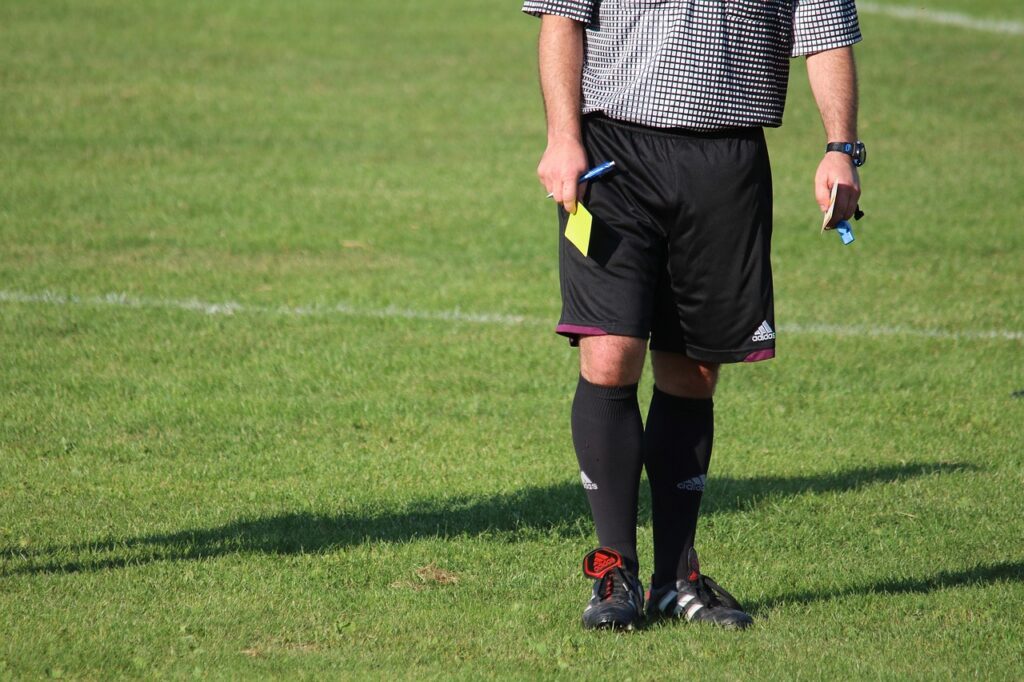

For football fans, stepping onto the gridiron as an official is one of the most rewarding ways to stay involved in the sport. Whether you are a former player, a dedicated fan, or someone looking for a physically active part-time role, officiating offers a front-row seat to the action.
With a widespread shortage of sports officials across the United States, newly certified referees are in exceptionally high demand. This guide breaks down the concrete steps, real-world costs, and structural pathways required to become a certified American football referee.
Why Become an American Football Official?
Before diving into the mechanics of certification, it helps to understand the practical benefits and expectations of the role:
- Stay Connected to the Game: If age, injuries, or life changes have taken you off the playing roster, officiating keeps you directly involved in the sport’s strategy and community.
- Earn Extra Income: Game fees vary widely depending on the competitive level and region. Youth league games typically pay $40 to $65 per contest, while varsity high school games range from $75 to $135+ per game. Working weekend tournaments can generate significant part-time revenue.
- Flexible Scheduling: Local officials’ associations use digital scheduling platforms, allowing you to accept or decline game assignments based on your personal and professional availability.
Step 1: Meet the Baseline Requirements
Before applying for certification, ensure you meet the fundamental criteria required by most state high school athletic associations:
- Age Requirements: To officiate high school varsity games, most states require you to be at least 18 years old and possess a high school diploma or equivalent. However, teenagers (ages 13–17) can often get started early by refereeing local youth leagues or recreational flag football.
- Physical Fitness: Football officiating is demanding. Depending on your position on the crew—such as a Line Judge or back judge—you must be capable of running short sprints and maintaining deep field positioning to observe plays accurately over a two-to-three-hour game.
- Background Clearance: Because you will be working around minors, passing a mandatory criminal background check and completing child abuse clearance protocols is a strict prerequisite in almost every state.
Step 2: Understand the Officiating Levels
New officials do not jump straight to Friday night varsity lights. Your career will follow a structured progression as you accumulate game repetitions and positive evaluations:
Youth & Middle School Leagues
Pop Warner, American Youth Football (AYF), and local municipal leagues are the standard training grounds for rookies. The game pace is slower, the rules are simplified, and the environment allows you to practice mechanics, penalty signals, and positioning with minimal pressure.
High School (JV and Varsity)
This level requires official state certification. The rules are significantly more complex, game speeds are faster, and you must work seamlessly as part of a 5-person, 6-person, or 7-person crew.
College & Professional Levels
Moving up to the NCAA or NFL requires years of varsity experience, elite performance ratings, attendance at advanced officiating clinics, and scout scouting invitations through developmental pipelines like the NFL Football Officiating Academy (FOA).
Step 3: Get Trained, Tested, and Certified
The path to official certification runs entirely through your state’s athletic governing body (such as the UIL in Texas, the OHSAA in Ohio, or the CIF in California).

The Digital Onboarding Process
Do not expect to register directly on a standard dot-gov website. Nearly all state associations handle their licensing, background checks, rule testing, and electronic payments through dedicated sports management platforms. You will need to create an account on either ArbiterSports or DragonflyMax, depending on which platform your specific state utilizes.
The Training Curriculum
Once registered on your state’s platform, you will complete a hybrid training regimen:
-
Classroom & Online Study: Most states utilize the NFHS Learning Center (National Federation of State High School Associations) and its Officiating Football curriculum. You will study fundamental rule definitions, safety protocols (including mandatory concussion identification), and clock management.
-
Rules Clinics: New and veteran officials must attend mandatory pre-season rules clinics to master annual rule adjustments, point-of-emphasis calls (such as targeting or illegal blindside blocks), and crew mechanics.
-
The Certification Exam: You must pass an annual, open-book written exam (usually requiring an 80% or higher score) hosted on your state’s officiating portal. The test focuses heavily on penalty enforcement, proper yardage assessment, and complex dead-ball scenarios.
Step 4: Purchase Your Officiating Gear
You are responsible for sourcing your own uniform and field tools. Your gear must strictly align with the aesthetic standards of your local association.
Expect an initial upfront investment of approximately $200 to $300 for a complete starter kit from dedicated providers like Official Sports or Honig’s.
| Category | Required Items | Notes / 2026 Standards |
| Apparel | 1-inch striped shirt, 2-inch striped shirt, black pants with white side-piping, black belt, fitted black cap with white piping (White cap for the Referee/White Hat). | Crucial: Check with your local chapter first; shirt stripe width requirements vary by state and league level. |
| Footwear | Solid black athletic shoes or cleats. | Must be kept polished and clean. |
| Field Tools | Fox 40 whistle (pealess), lanyard, yellow penalty flag (weighted), blue bean bag, down indicator wristband, game card, pencil, yardage chain clip. | Carry a backup whistle and a second penalty flag at all times. |
Pro Tip: Before buying everything brand new, ask your local officials’ association leaders if they have a “hand-me-down” program. Retiring or advancing veterans frequently donate lightly used gear to help rookies offset initial startup costs.
Step 5: Join Your Local Officials’ Association
Passing your exam only makes you certified on paper; joining a local referee chapter gets you onto the field. Your local association acts as your administrative hub:
- The Assignor: Local chapters employ independent “Assignors.” This individual is responsible for matching available officials with local school districts and youth leagues. Building a professional relationship with your assignor is the single fastest way to secure games.
- Crew Mentorship: Rookie officials are typically paired on youth crews with seasoned veterans who provide live, on-the-field critique regarding positioning, tracking the ball, and managing coaches.
Core Strategies for On-Field Success
- Master the Rulebook, but Focus on Mechanics First: Coaches will forgive a minor rule misinterpretation much quicker than they will forgive an official who is consistently out of position. Learn exactly where to stand on punts, field goals, and passing plays.
- Accept Your Starting Position: On a standard rookie high school crew, you will start on the wings as a Line Judge (LJ) or Linesman (H/HL). You will not wear the “White Hat” as the Head Referee until you have earned years of crew leadership experience.
- Prioritize Player Safety Over Everything: Modern football officiating places immense legal and ethical emphasis on player safety. Be rigid and uncompromising when calling targeting, spearing, horse-collar tackles, and late hits out of bounds.
- Maintain Professionalism: Arrive at the stadium at least 60 to 90 minutes before kickoff, dress professionally upon arrival, and approach coaches with calm, respectful, and authoritative communication when explaining a penalty enforcement